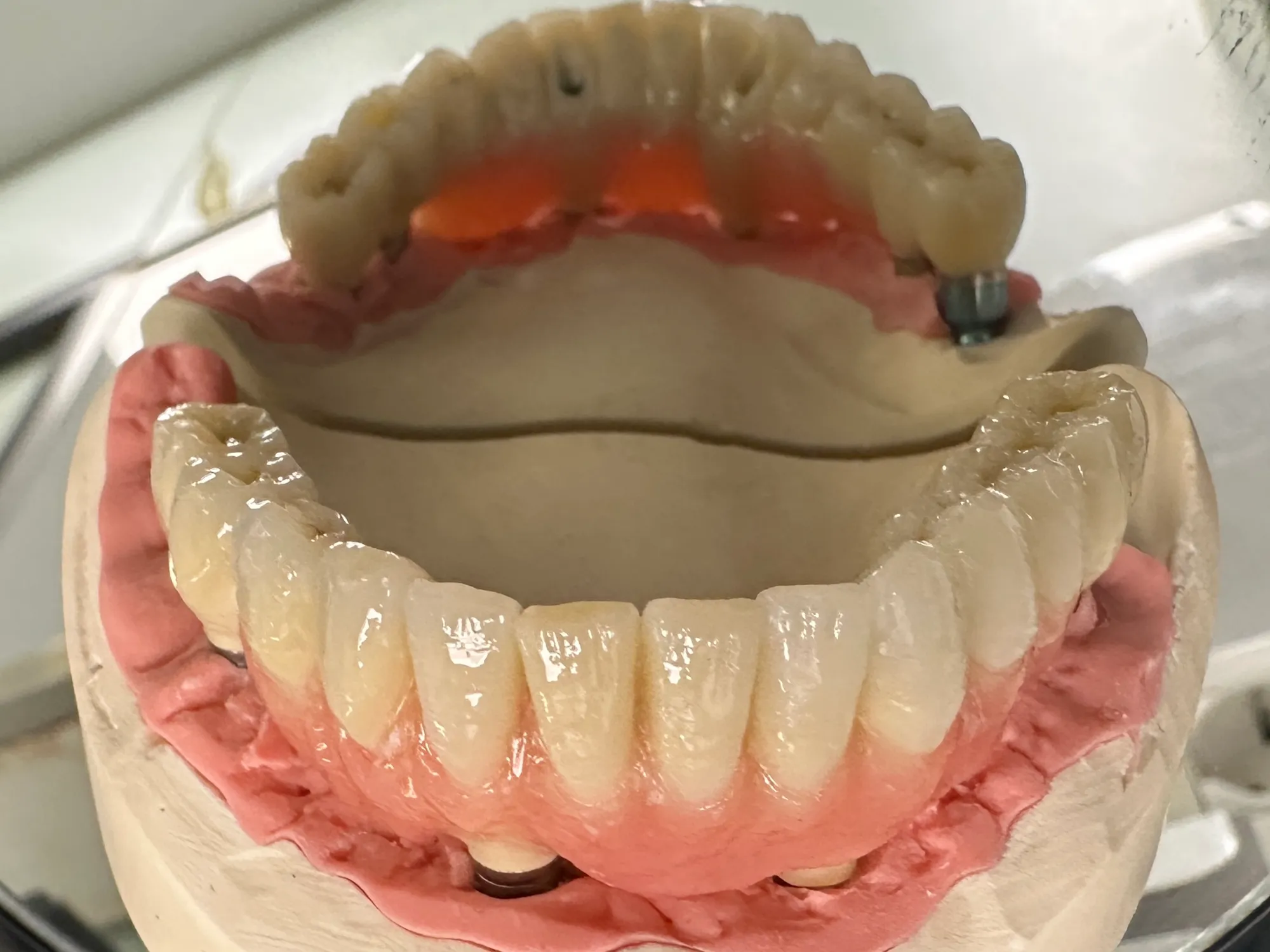
Dental implants in Brescia
Advanced implant solutions to regain your smile and chewing function
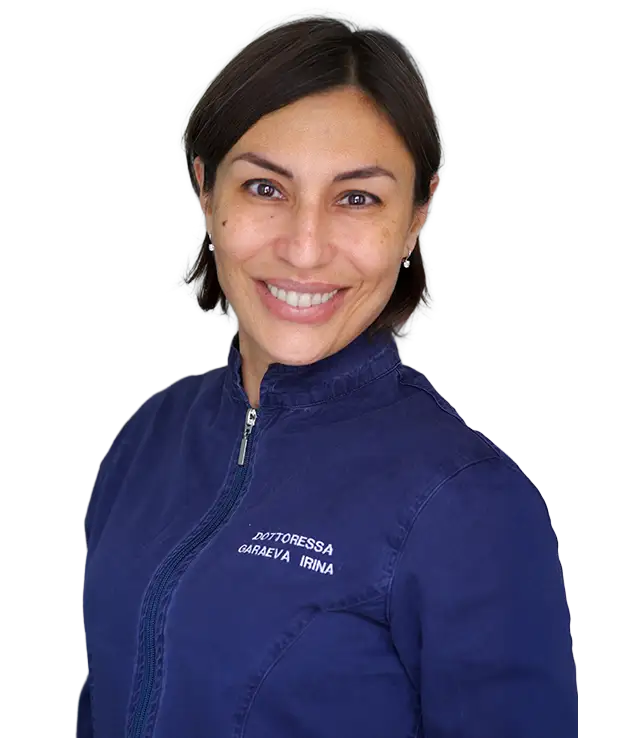
In the dental practice Garaeva, in Brescia, each implant treatment is tailor-made, based on the clinical condition and the functional and aesthetic needs of the individual. Thanks to the use of state-of-the-art technologies and techniques of minimally invasive oral surgery, It is possible to achieve excellent results with reduced recovery times and greater post-operative comfort, restoring the teeth in a stable, safe and lasting manner, even in the most complex cases or in the presence of little residual bone.
Accurate diagnosis and state-of-the-art technology
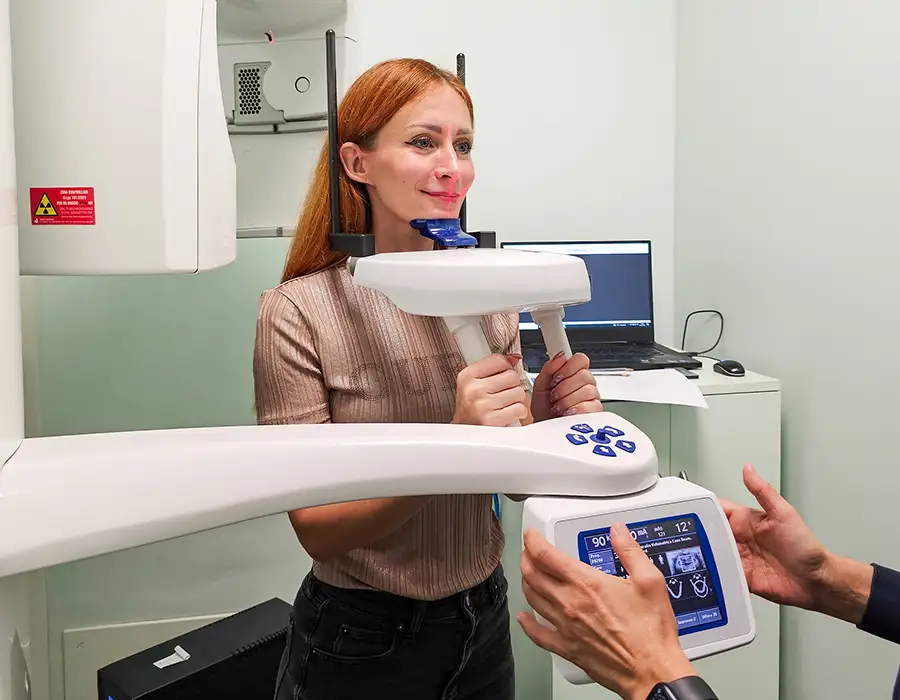
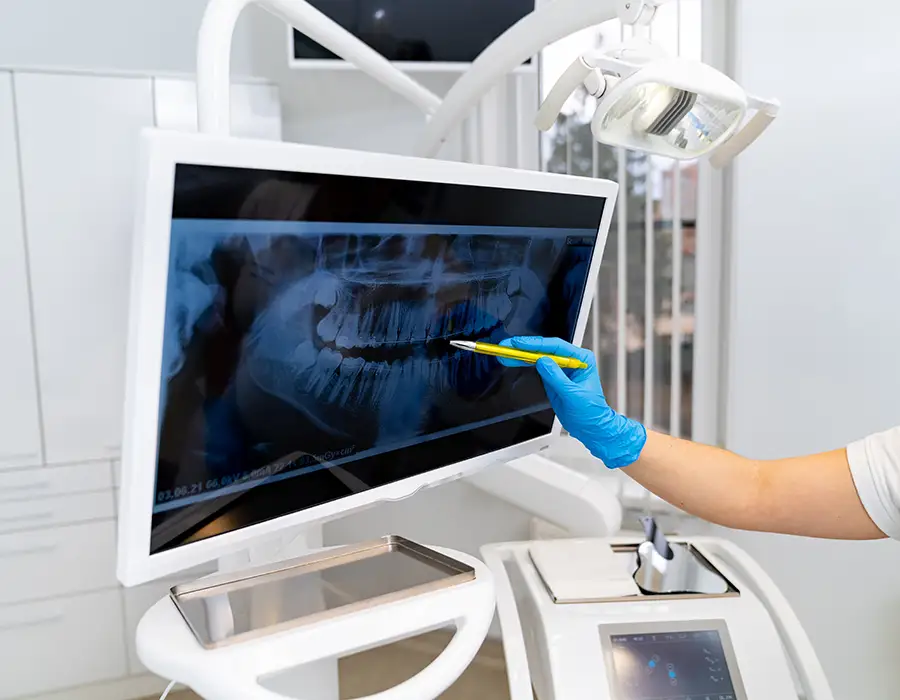
An effective treatment plan always starts with a precise diagnosis and complete. Through the 3D Cone Beam CT, the practice is able to analyse in detail the volume and quality of available bone, assess the surrounding anatomical structures, and digitally plan each stage of the surgery.
Planning takes place with software of computer-guided surgery and the use of customised surgical templates which allow implants to be inserted with micrometric precision. Maximum safety is guaranteed in every procedure thanks to the constant presence of a anaesthetist-resuscitator, which manages conscious sedation and monitors the patient at all times.
FEAR OF THE DENTIST?
RELAX: WE HAVE CONSCIOUS SEDATION
Conscious sedation is a completely painless and absolutely safe technique that helps the patient relax during the session, without ever losing lucidity. It can be adopted for any dental procedure, more or less invasive, to treat phobic or anxious patients or those who have to undergo long and complex treatments.
Computer-guided and minimally invasive surgery: precision and comfort
La digitally guided surgery is one of Garaeva's strengths. After the acquisition of the Cone Beam CT, a digital simulation of implant placement is prepared, which makes it possible to avoid delicate anatomical areas and choose the best position for the implant. All this results in a surgery minimally invasive, often without cuts or sutures, performed with the help of customised surgical templates. This approach significantly reduces post-operative trauma, It limits swelling and pain, and promotes a much faster recovery than traditional surgery.
Biocompatible dental implants: strong, certified and of quality
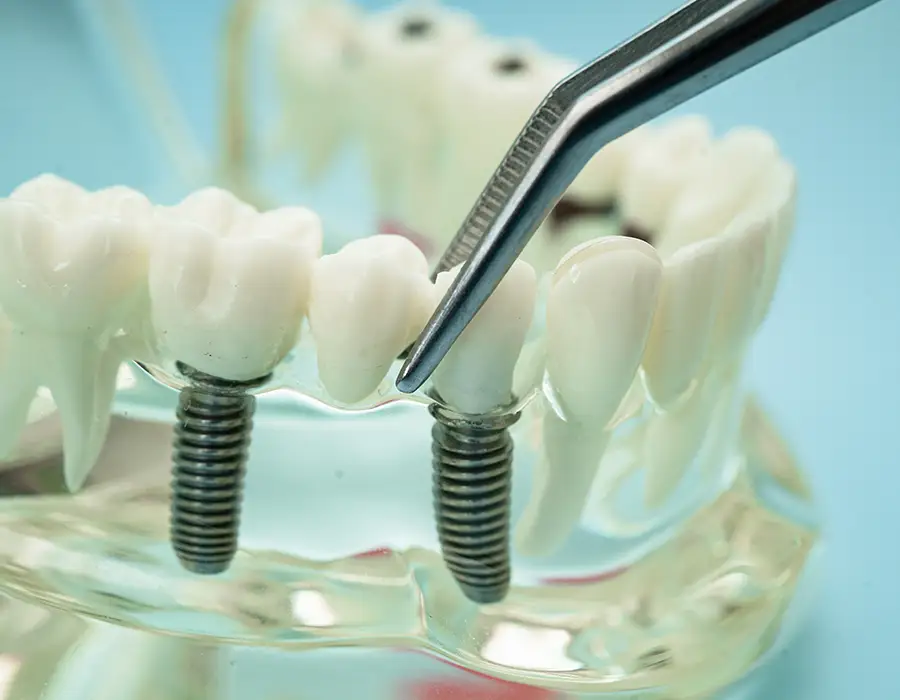
L’dental implant is an artificial titanium root that replaces a missing natural tooth. Once osseointegrated, it serves as the basis for a crown, bridge or fixed prosthesis.
At the Garaeva studio, only materials of the highest quality, chosen according to the patient's clinical condition and preferences.
The titanium implants are the most popular due to their excellent biomechanical properties and high clinical success rate. In specific cases, for aesthetic or biocompatibility reasons, it is possible to opt for installations in zirconium, completely metal-free.
When natural bone is not sufficient for conventional insertion, the following are adopted advanced implant techniques, which can offer safe solutions even in cases of severe edentulism or bone atrophy.
Immediately loaded implants:
function and aesthetics quickly
The immediate loading involves the application of a fixed provisional prosthesis a few hours after implant placement. It is not suitable for everyone, but can be adopted in the presence of good bone volume and when optimal primary implant stability is achieved.
I main advantages of this solution are immediate comfort, the possibility of get right back to smiling and eating (with appropriate precautions) and a better psychological impact. It is a safe procedure that is only proposed after a careful analysis of the clinical condition.
Deferred load implants:
safety and stability over time
The deferred load is the ideal choice when it is important to ensure maximum integration between the implant and the bone before fitting the prosthesis. There is usually a healing period of 3 to 6 months, during which the implant fully osseointegrates.
This mode offers very stable long-term results and is often associated with bone regeneration surgery, sinus lift or implants in anatomically critical areas.
What to do when the bone is insufficient?
In order to be able to place a dental implant safely and durably, it is essential that sufficient bone is present at the insertion site. L’alveolar bone has the task of accommodating the implant and integrating it stably over time. When the bone is too thin, too low or has a reduced density, it is not possible to place the implant correctly: this would risk early loss of the structure or failure of the operation.
Thanks to Dr Garaeva's advanced approach, it is possible to intervene with specific solutions to regenerate or exploit residual bone, restoring full functionality and stability to the smile. Depending on the area involved and the extent of the bone deficiency, the practice evaluates the adoption of targeted techniques such as guided bone regeneration or sinus lift, as well as alternative implant solutions such as zygomatic, pterygoid or nasal implants.
Bone regeneration: rebuilding what has been lost
La guided bone regeneration is a reconstructive surgery technique that makes it possible to increase the volume of the maxillary or mandibular bone before or during implant placement. It is used when the patient has localised or generalised bone loss, often due to prolonged edentulousness, periodontal disease or post-extraction resorption.
During surgery, biocompatible bone material is inserted - which can be autologous (taken from the patient himself) or heterologous (of animal or synthetic origin) - at the area to be reconstructed. This material acts as a scaffold and stimulates the regeneration of natural bone tissue, which in a few months will replace the inserted material, becoming solid and stable.
Maxillary sinus lift: a targeted technique for the upper jaw
The sinus lift is a specific surgical procedure for the’posterior upper arch, where there is often insufficient bone due to the proximity of the sinus cavity. When upper molars or premolars are extracted, the sinus tends to expand, reducing the thickness of the available bone.
During the intervention, the maxillary sinus gently lifting the inner membrane and inserting bone material between the base of the sinus and the lifted membrane. This creates the necessary space for new bone to form, thick enough to support an implant.
There are two main approaches: the lateral rise, used in cases of significant bone resorption, and the internal (or transcrestal) elevation, which is less invasive and indicated when the residual bone is moderate. In many cases, the’system can be inserted at the same time upwards, optimising time and results.
Pterygoid implants: stability even in the absence of posterior bone
The pterygoid installations are placed in the posterior area of the upper jaw, taking advantage of the pterygoid bone, a deep and compact structure that provides excellent stability. This technique is indicated for patients with severe bone resorption in the upper molar area, where traditional implants cannot be placed. The procedure makes it possible to avoid complex bone regeneration, reducing treatment time and allowing, in many cases, a fixed prosthesis to be fitted quickly.
Zygomatic implants: a solution for extreme atrophies
When the atrophy of the upper jaw is particularly severe and there is no longer sufficient alveolar bone, the zygomatic implants are the most effective solution. These implants are anchored directly to the’zygomatic bone, a solid structure located lateral to the maxilla. This technique avoids the need for massive bone grafts and allows the restoration of masticatory function even in patients who have been edentulous for many years.
Trans-sinus nasal implants: for the maxillary anterior area
The trans-sinusal nasal implants exploit the bone in the nasal floor area for implant placement as an alternative to conventional frontal implants. They are indicated in cases of significant resorption of the anterior maxillary bone, a condition that often prevents the placement of conventional implants. Here too, guided surgery allows precise planning and safe placement, without the need for invasive regeneration. This technique allows complete smile rehabilitation, even in patients with severe anterior edentulism.

 Italiano
  English (UK)
  Русский