Oral surgery in Brescia
Targeted treatments, advanced technologies, minimally invasive approach
At the Garaeva dental practice in Brescia, every course of treatment is based on prevention, conservative care of natural teeth and a multidisciplinary approach that considers each person as a whole. However, there are situations in which recourse to the oral surgery is the most effective solution for resolving functional, inflammatory or aesthetic problems in a stable and lasting manner. In these cases, treatment is always carefully planned, aiming at the maximum safety, patient comfort and minimum impact on tissue.
Advanced technologies at the service of minimally invasive surgery
To ensure increasingly precise, safe and painless, our practice integrates the best diagnostic and operational technologies available in dentistry today:
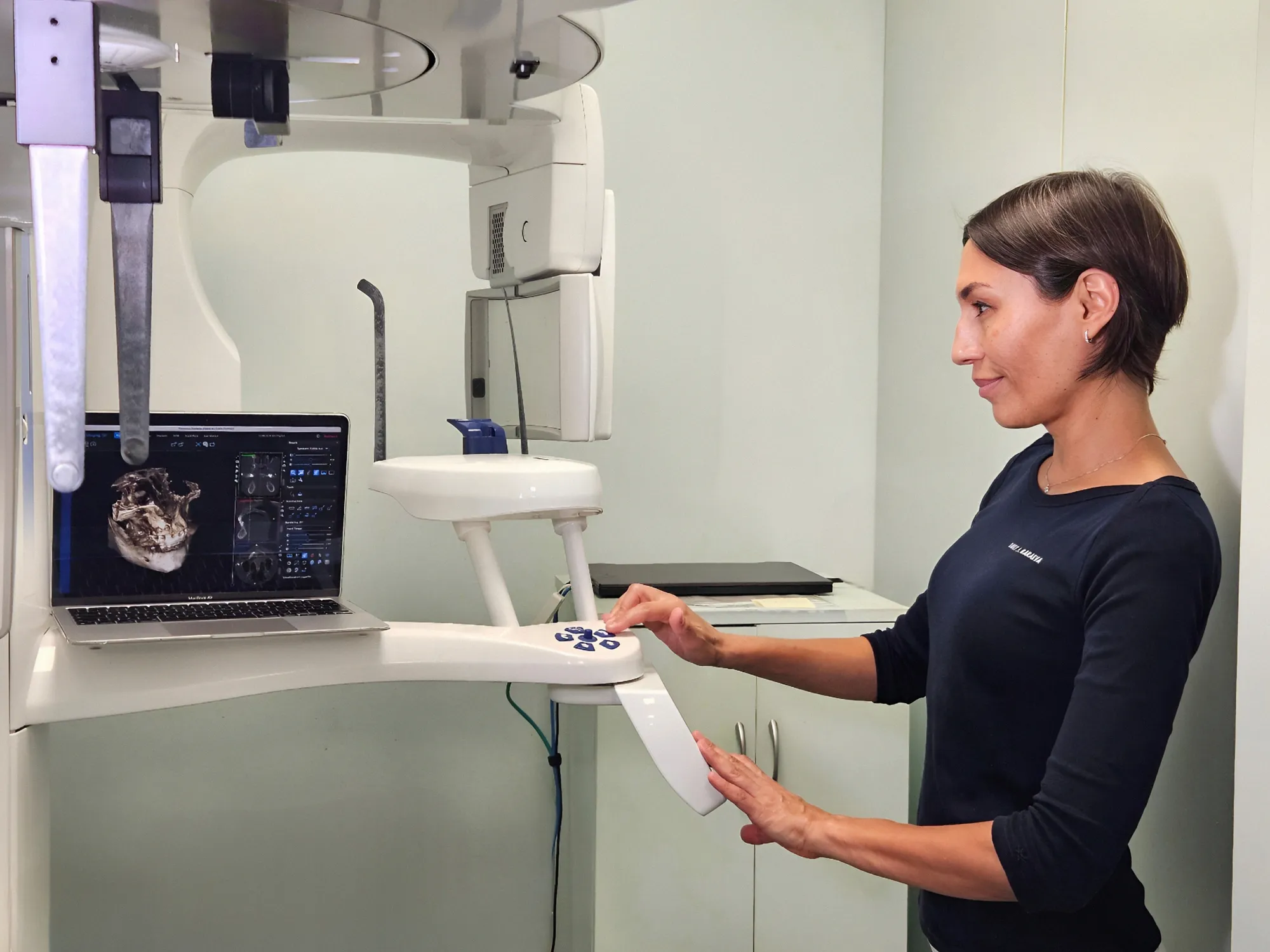
- 3D Cone Beam CTIt provides high-resolution three-dimensional images, which are essential for planning every surgical procedure in detail.
- Computer-guided surgeryUsing dedicated software and customised surgical templates, we can perform implants with extreme precision, reducing surgical time and trauma for the patient.
- Laser and piezosurgeryinstruments that enable soft and hard tissue to be worked on gently, reducing post-operative bleeding and swelling.
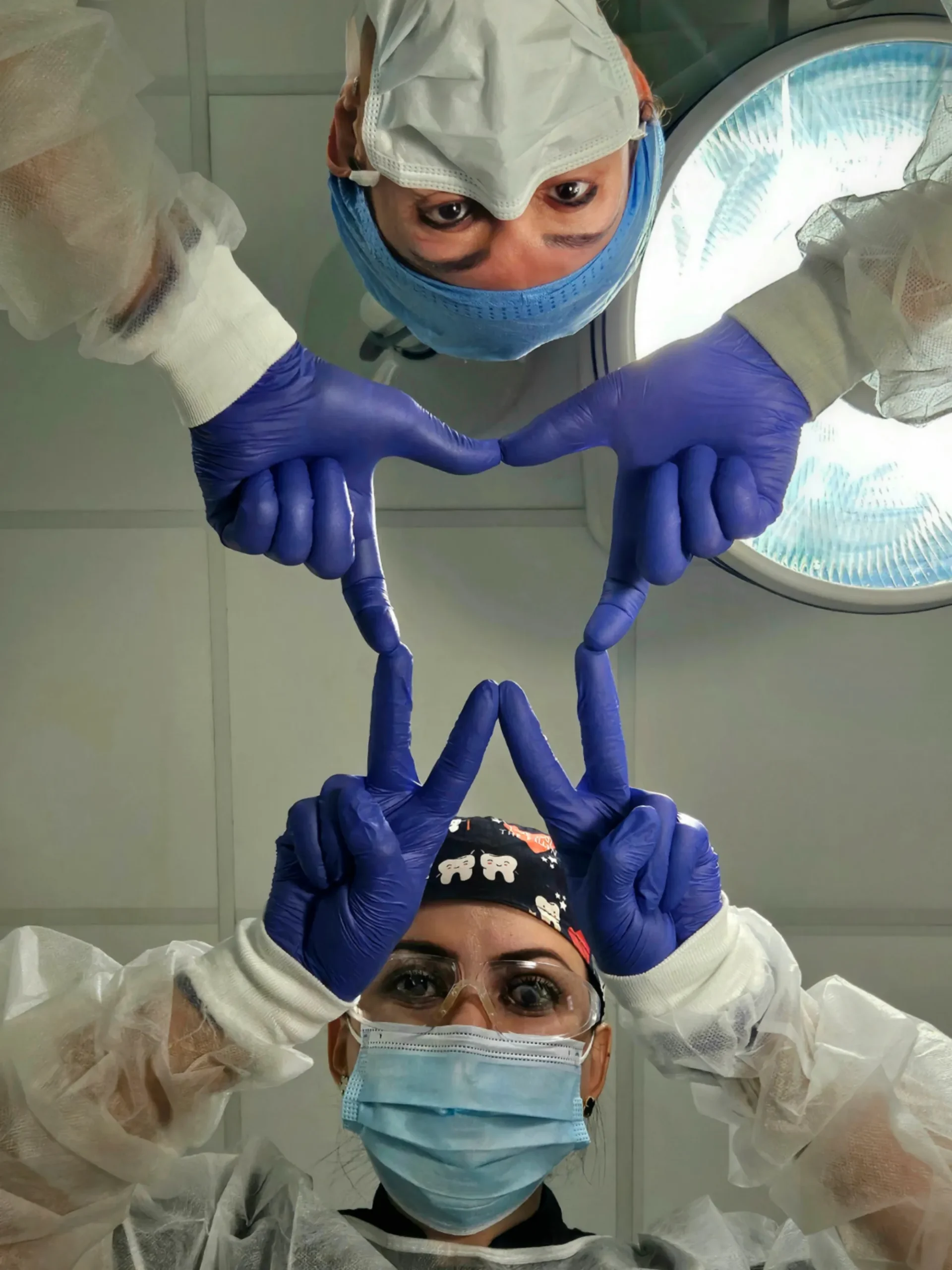
FEAR OF THE DENTIST?
RELAX: WE HAVE CONSCIOUS SEDATION
Conscious sedation is a completely painless and absolutely safe technique that helps the patient relax during the session, without ever losing lucidity. It can be adopted for any dental procedure, more or less invasive, to treat phobic or anxious patients or those who have to undergo long and complex treatments.
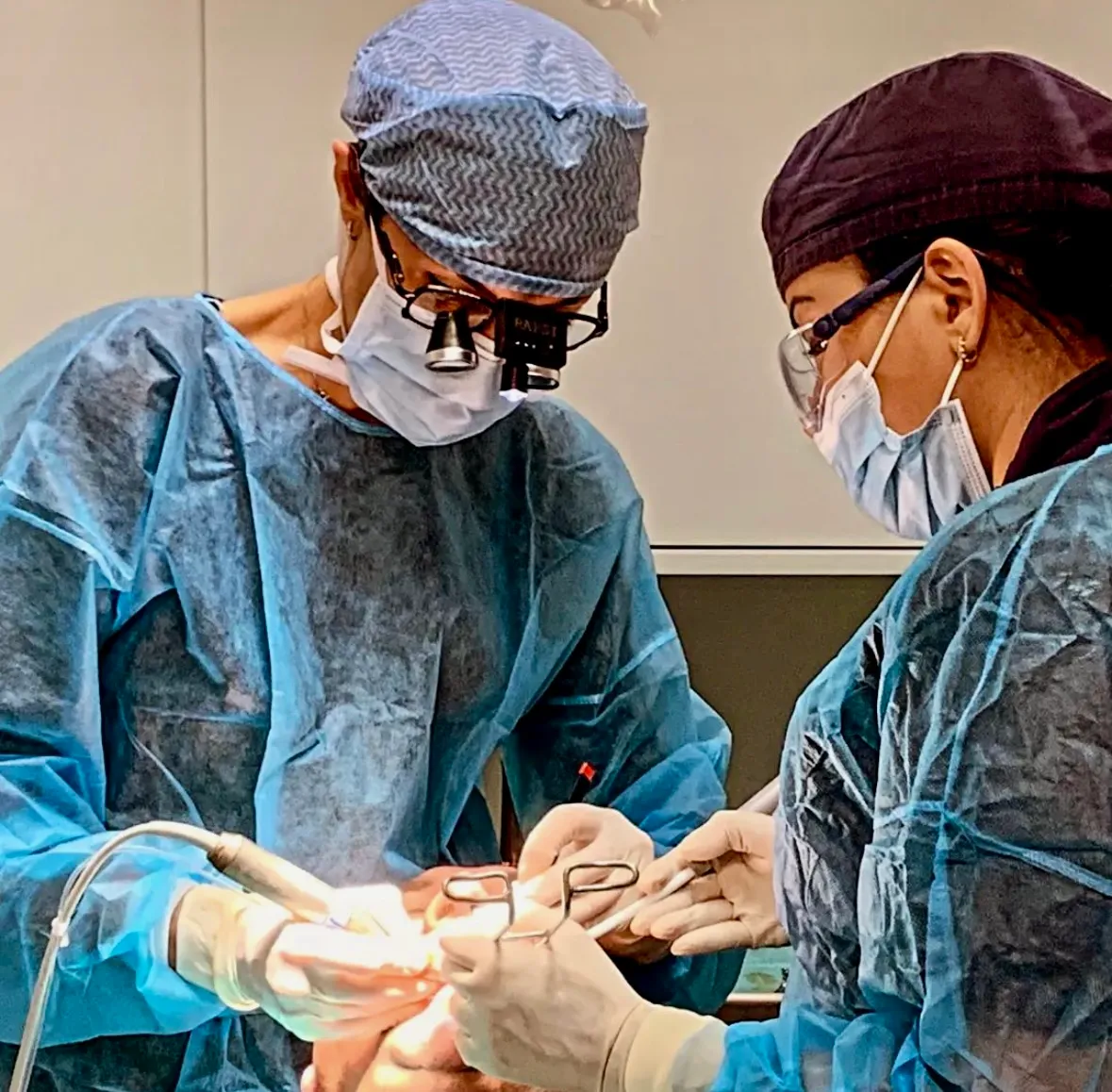
Oral surgery procedures performed in the practice
Every oral surgery is performed with minimally invasive techniques and planned on a tailor-made basis, carefully assessing the general state of health, functional and aesthetic requirements, and the advisability of integrating several treatments to achieve comprehensive and lasting results.
Insertion of dental implants
Implant placement is one of the most effective solutions for restore chewing function and smile aesthetics when one or more teeth are missing. Depending on the quantity and quality of available bone, they can be used:
- Traditional installationsideal for most cases.
- Pterygoid, zygomatic, nasal, trans-sinus implantsindicated for patients with severe bone atrophy, when regeneration is not possible or would be too invasive.
Thanks to the computer-guided surgery, implants can be placed extremely precisely, even in complex anatomical spaces. These procedures can be combined with fixed prostheses, bone grafts or tissue regeneration, offering effective solutions even in cases considered “inoperable”.
Dental avulsion (including wisdom teeth)
L’dental extraction becomes necessary when a tooth is severely compromised by fractures, deep caries, extensive infections or advanced periodontitis. I wisdom teeth, in particular, often grow in the wrong position or remain embedded in the bone, causing inflammation, cysts or displacement of other teeth.
In our studio we perform simple and complex extractions, including the avulsion of wisdom teeth in any position, with techniques atraumatic and under conscious sedation, for minimise pain and swelling.
Removal of cysts and granulomas
Le odontogenic cysts and the periapical granulomas are chronic inflammatory lesions that form at the base of a devitalised or infected tooth. They can cause pain, swelling, bone resorption and damage to surrounding structures.
Through an accurate radiographic diagnosis (Cone Beam CT), the nature and extent of the lesion is identified, and surgery is performed to selectively remove it, without compromising healthy tissue. These operations can be associated with bone regeneration or to apicectomy, if the tooth is maintained.
Apicectomy
When root canal treatment (devitalisation) is not sufficient to eliminate a tooth root infection, the’apicectomy represents the conservative alternative to its extraction. The intervention consists of surgical removal of the root apex and infected tissue surrounding. It is particularly indicated in cases where the tooth is well preserved, but a chronic localised infection persists.
Mucogingival surgery and gingival repositioning
Mucogingival surgery comprises a series of procedures aimed at correcting gingival recessions, asymmetries of gingival parabolas and other soft tissue alterations that compromise aesthetics and periodontal health.
In particular, the repositioning of the gingival margin can cover exposed roots, improve tissue adhesion and protect against tooth sensitivity, root caries and bone loss. It is often combined with advanced periodontal therapies, or to treatments of cosmetic dentistry (veneers, crowns, implants).
Gummy smile surgery
The gummy smile occurs when, when smiling, an excessive amount of gingiva is shown, creating an aesthetic imbalance. In these cases, targeted gum and/or bone surgery can be performed, which reshapes the gingival contour making the smile more harmonious and proportionate.
The intervention can be supplemented with orthodontic treatments or aesthetics, such as veneers or crowns, to complete the result.
Sinus lift
The sinus lift is an advanced surgical technique used in cases where there is too little bone available in the posterior sector of the upper jaw to insert an implant. The procedure consists of lifting the sinus membrane e insert regenerative biomaterial to create a new bone volume.
It is often the first step in a implant pathway and is always planned using 3D imaging and computer-guided surgery.

 Italiano
  English (UK)
  Русский