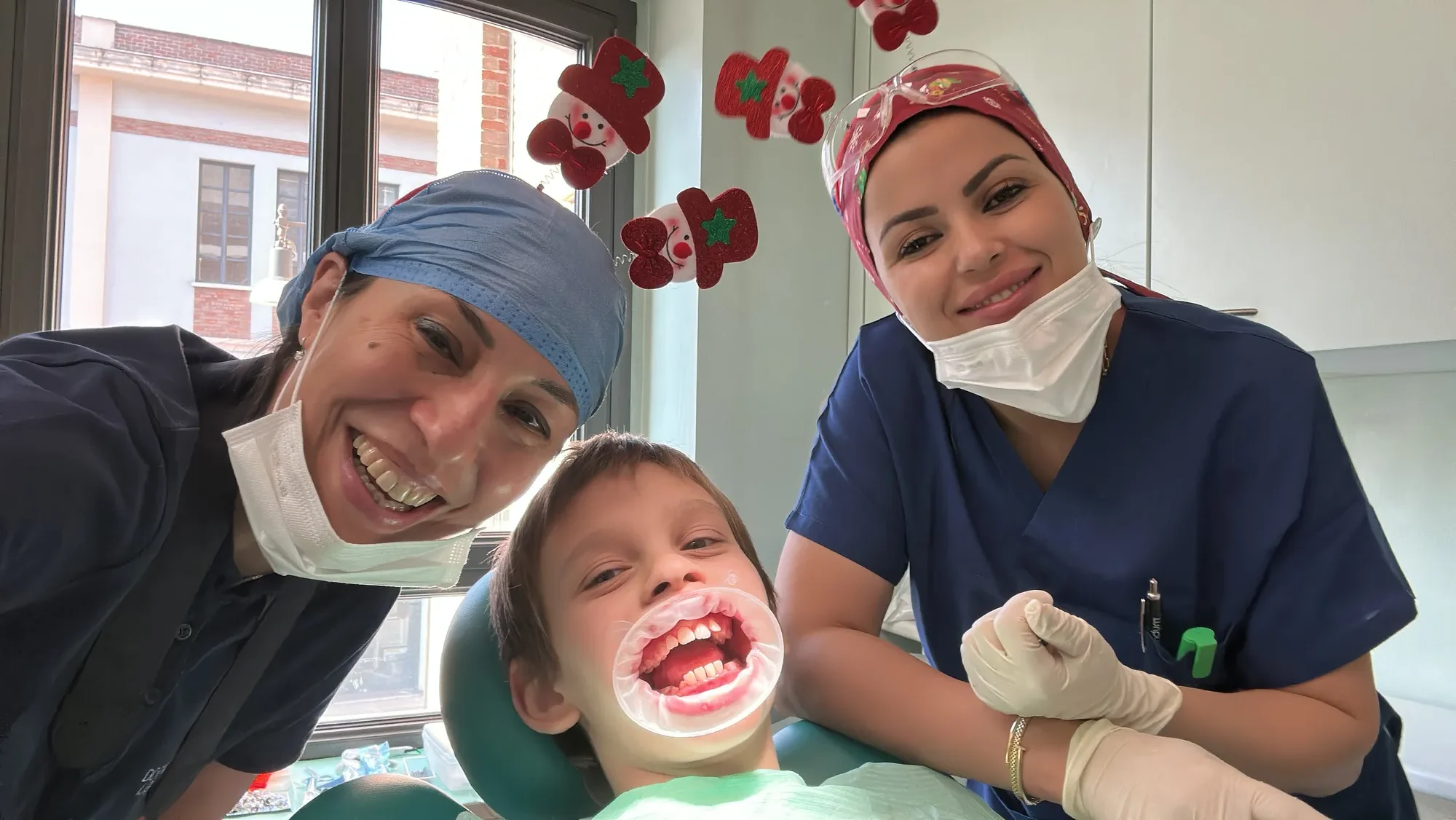
Paediatric dentistry in Brescia
Oral prevention, trust and care: a child-friendly pathway
Every child has the right to experience the dentist as a positive moment, free of anxiety or fear, which is why we adopt a empathic and respectful approach to emotions of the little patient, right from the first meeting. For us, welcoming a child means entering his or her world, made up of curiosity, play and sensitivity. That is why each visit is built as a path of knowledge and trust, where nothing is imposed but everything is explained, shared, transformed into a comprehensible and reassuring experience.
No fear!
Welcoming and playing for happy little patients
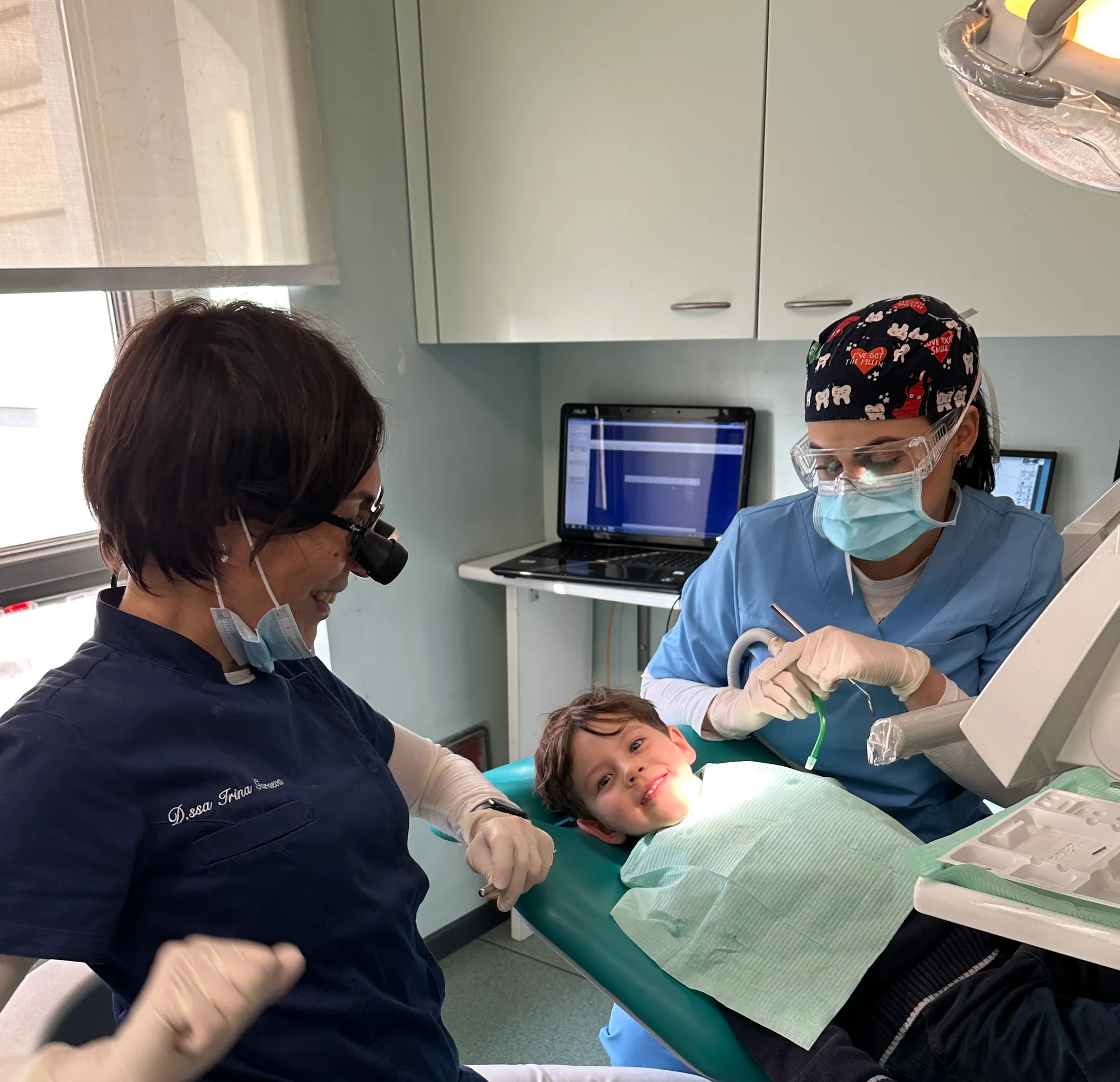
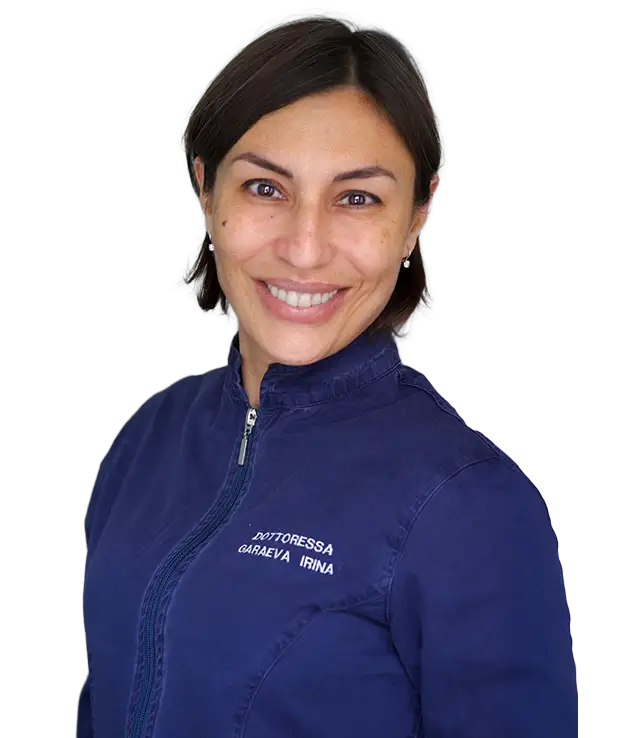
The first step is always listening: the Dr Garaeva is personally involved in the care of children, adopting a simple language and an engaging communication style. Every word, every gesture, every moment of the visit is designed to establish a relationship based on the trust and peace of mind, avoiding impositions or hasty interventions. Only when the child feels truly welcomed, understood and safe, do we proceed with clinical assessments and - if necessary - treatment.
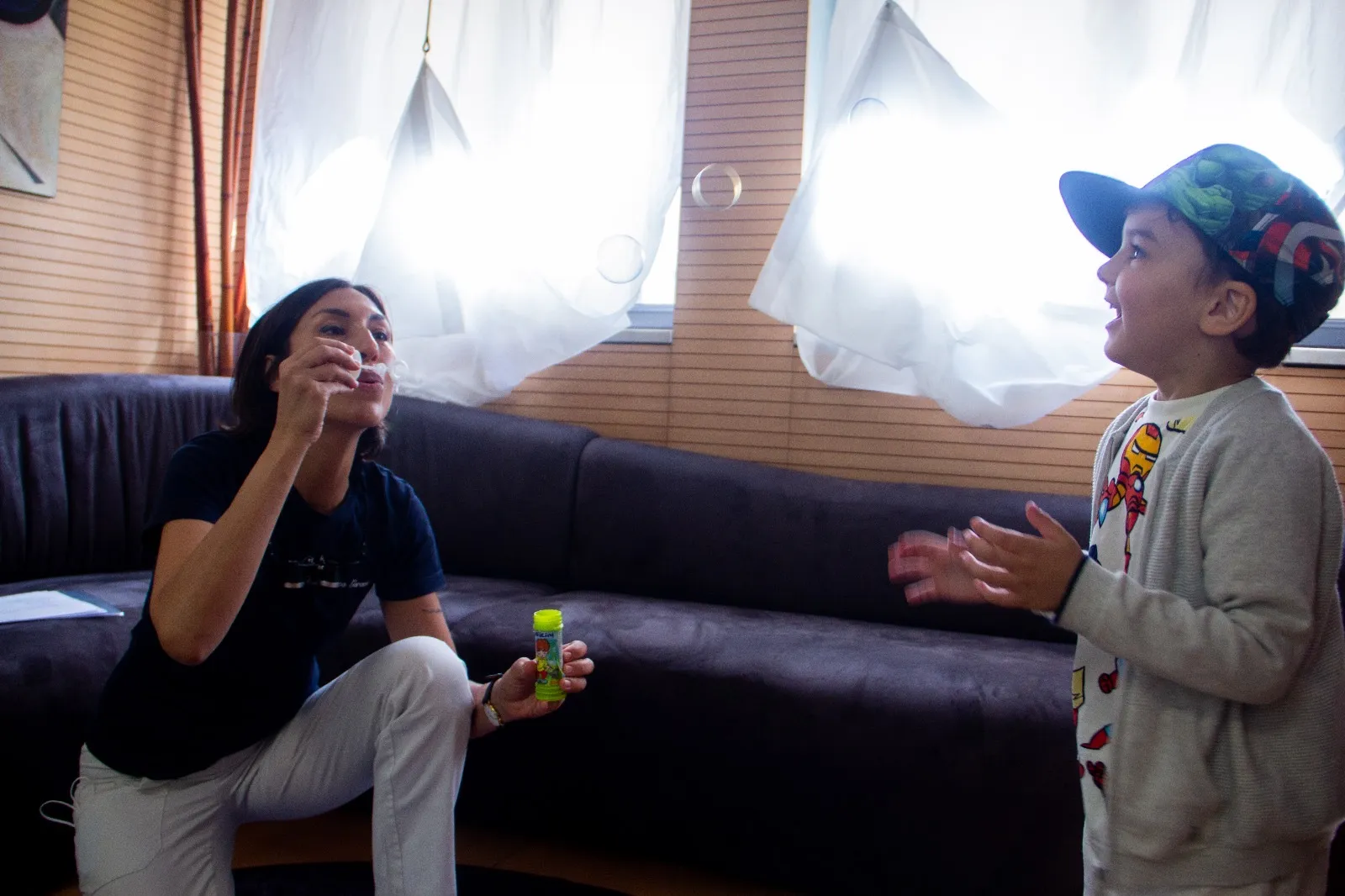
This approach is the result of a specific choice: avoid that the child associates the dentist with something painful or frightening. The fear of the white coat, often stems from negative experiences in the first years of life. That is why we pay special attention to our youngest patients, giving them reassuring words and a serene environment: in waiting room there is a play corner all to themselves, where they can relax and feel at home. And at the end of the visit there always awaits them a small reward - markers, soap bubbles, colourful brushes, games - which makes the experience pleasant and positive.
The objective is clear: to ensure that the child grows up without any trauma related to the figure of the dentist, learning from an early age to taking care of one's mouth and to attend the dentist's office regularly. Because a serene relationship with oral health, built in childhood, is the first step to having healthy teeth for life.
The dental protocol for children's oral health
After getting acquainted through an initial interview with the child and the parents, we carry out a clinical examination of the face and smile and, only if strictly necessary, also X-rays.
This approach makes it possible to assess the state of oral health, identify any functional or postural problems and propose targeted solutions. Generally, dental treatments for children include:
Home hygiene education
Prevention starts with awareness.
Therefore, one of the priorities of the’paediatric dentistry is the’oral hygiene education.
We teach each child - with simple language and practical tools - how to take care of their teeth, explaining the importance of proper brushing, flossing and a balanced diet. The aim is to make the child the protagonist of his or her own oral health, so that he or she learns to maintain a healthy mouth with peace of mind and continuity.
Professional hygiene and anti-caries prevention
Preventing caries means acting on several fronts, starting with professional oral hygiene. The cleaning teeth is gentle but thorough, with specific instruments to remove plaque and food residues.
To complete the hygiene, the professional fluoroprophylaxis, to strengthen the enamel of deciduous and permanent teeth, creating a protective barrier against the attack of cariogenic bacteria. These periodic appointments - experienced as routine and not as an emergency - are essential for educating children about the importance of prevention.
Caries care
La caries treatment in milk teeth is performed with minimally invasive techniques and instruments designed not to frighten the child.
Treatment is always preceded by an explanation, and each step is accompanied by reassuring words and gentle gestures so that the child feels involved and never overwhelmed. Treating a caries in time means not only avoiding pain, but also protecting the space for permanent teeth and maintaining proper chewing.
Dental extractions
In some cases, it may be necessary to’extraction of a milk tooth, for example, when it does not fall out spontaneously or when it hinders the correct eruption of the definitive tooth. Also in this case, the operation is performed with the utmost delicacy, under local anaesthesia and only after reassuring the little patient. Once the tooth has been extracted, a small spacer is inserted to help maintain the space while waiting for the eruption of the definitive tooth.
Interceptive orthodontics: guiding development and preventing disharmonies
L’interceptive orthodontics for children is a fundamental branch of paediatric dentistry that makes it possible to recognise and correct at an early stage developmental alterations of the jaw bones, dental misalignments or pampered habits such as oral breathing, atypical swallowing, finger sucking or prolonged dummy use. Intervening in the first years of life - even before the appearance of permanent teeth - means preventing more serious disorders and set up harmonious growth of the face and mouth from the outset.
At Dr. Garaeva's dental practice in Brescia, each child is carefully monitored and, if necessary, directed towards a targeted orthodontic course: the assessment is carried out in collaboration with the Dr Sergio Monza, a specialist in orthognathodontics, who diagnoses malocclusions early and proposes customised interceptive treatments.
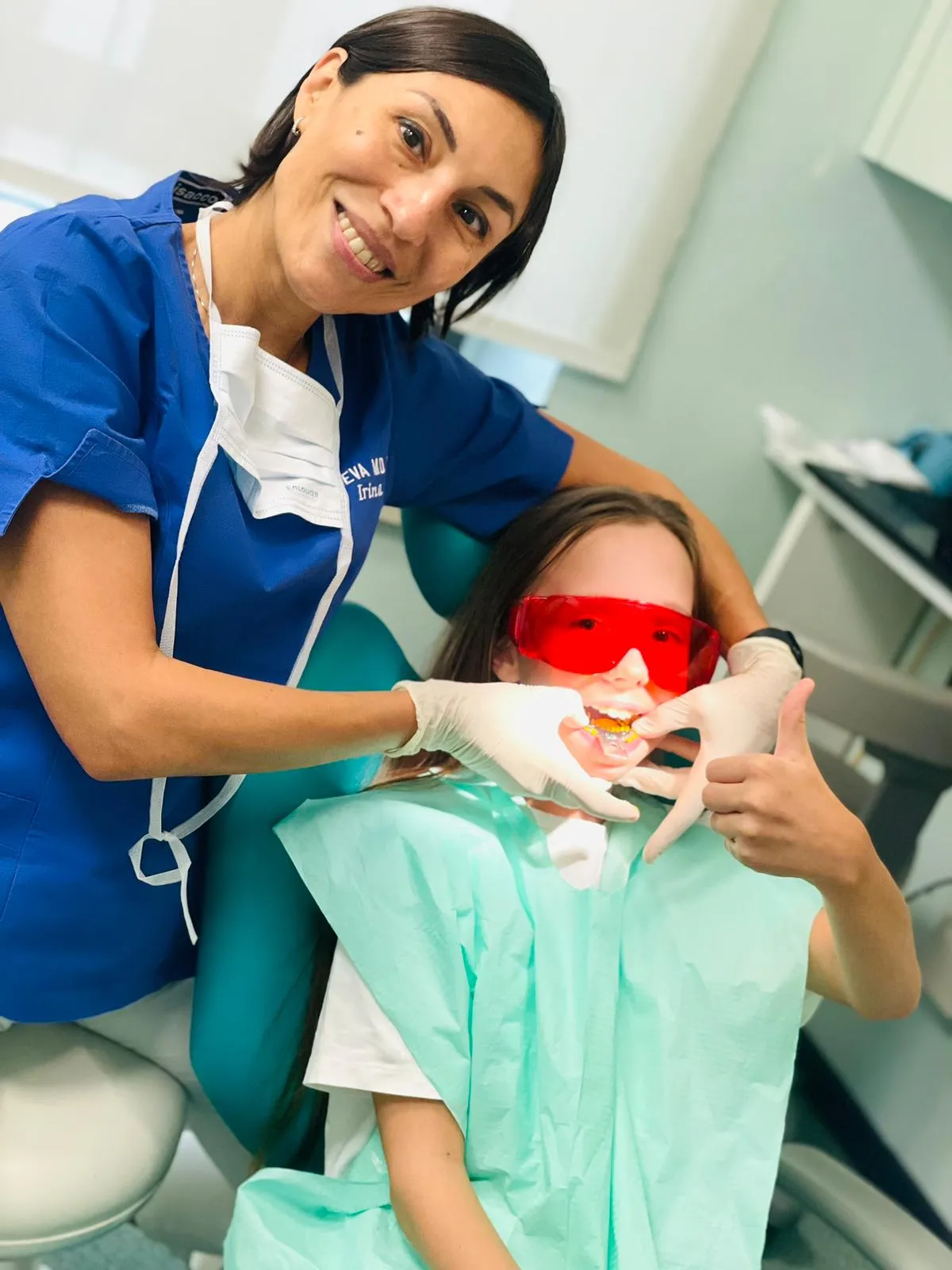
The orthodontic appliances used in children vary according to the problem: you can use palatal expanders to stimulate the growth of the upper jaw, functional mobile devices to correct muscular misalignments and imbalances, or bipli or fixed devices light and well tolerated even by the youngest patients.
The support of speech therapy and physiotherapy for an integrated, problem-solving approach
For a stable and lasting result, it is often necessary to work in synergy. In the presence of respiratory, masticatory or postural alterations, the practice collaborates with a speech therapist, Dr. Elena Cuilleri, to re-educate the oral musculature and correct dysfunctional swallowing and phonation patterns, and a specialised physiotherapist, Dr Cristiana Cadonna, to support postural balance and improve harmony between the skull, jaw and spine.
This integrated approach allows not only correct the orthodontic problem, but to address the underlying causes, offering the child a comprehensive, tailor-made pathway that promotes a balanced development of the face and oral functions. A valuable investment in healthy smiles and more.
Dentist for children in Brescia: when to start and why do it with us
Taking the child to the dentist at an early age - ideally around 3 years of age - makes it possible to intercept possible problems at an early stage and to accustom him from the outset to experiencing the dental check-up with serenity.
Thanks to a empathic approach, to a designed environment to put the little patient at ease, and to protocols comprehensive care and customised, growing up with a healthy smile is possible: we are here to accompany every child along this path, step by step.

 Italiano
  English (UK)
  Русский